Web Editors:
Rick Maine
---

FB Page
(External)
OBEDIENCE AT KEYSTONE CANINE TRAINING CLUB

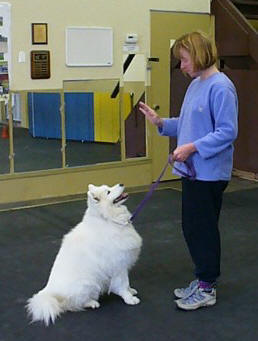 WHAT IS OBEDIENCE TRAINING? – Obedience training is a
fundamental tool to train your dog to obey your commands with words, hand
signals or both. A well-trained dog is a well-behaved family member, a
welcome member of the community, and increases the bond between you and your
dog.
WHAT IS OBEDIENCE TRAINING? – Obedience training is a
fundamental tool to train your dog to obey your commands with words, hand
signals or both. A well-trained dog is a well-behaved family member, a
welcome member of the community, and increases the bond between you and your
dog.
HOW DO WE TEACH OBEDIENCE TRAINING AT KCTC? - Our programs teaches the handlers how to train their dogs utilizing positive reinforcement. Positive reinforcement is a method of training in which dogs are rewarded for choosing to do a desired behavior. Positive reinforcement helps to build confidence in dogs and reinforce the leadership role of the handler. We do not believe in harsh corrections or punishment.
WHAT CLASSES DOES KCTC OFFER? – The KCTC Obedience Training Program consists of:
Puppy Pre-School (puppies 8 - 14 weeks old)
Building Puppy Confidence (puppies 15 - 24 weeks old)
Family Manners I (6 months and older)
Family Manners II and Family Manners III
Obedience Reinforcement (Advanced Basic Obedience)
Canine Good Citizen and Therapy Dog preparation
AKC Open Obedience (Drop-in class)
Rally Obedience (AKC and WCRL - see the RALLY page on this website)

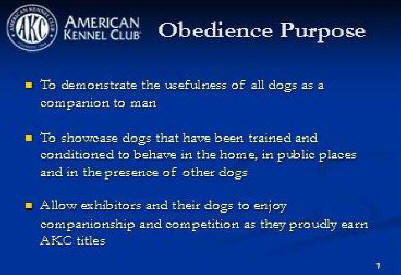 OBEDIENCE TRAINING EXPLAINED - KCTC teaches you the basic
obedience skills including: attention, sit, down, stand, stay, come, heel,
leave it (disregard food distractions), and off (no jumping). From that
point you can continue to polish your dog’s skills and learn more advanced
obedience techniques in our Family Manners II and III classes. You can also take
our Canine Good Citizen (CGC)/ Therapy Dog International (TDI) preparation class. CGC is an American Kennel Club (AKC)
certification program that is designed to reward dogs who have good manners
at home and in the community. TDI is a certification program for handlers
who want to do therapy work (such as nursing home visits) with their dogs. Our Rally Obedience Class is a fun and innovative
way to complete various obedience exercises solely by following signs.
OBEDIENCE TRAINING EXPLAINED - KCTC teaches you the basic
obedience skills including: attention, sit, down, stand, stay, come, heel,
leave it (disregard food distractions), and off (no jumping). From that
point you can continue to polish your dog’s skills and learn more advanced
obedience techniques in our Family Manners II and III classes. You can also take
our Canine Good Citizen (CGC)/ Therapy Dog International (TDI) preparation class. CGC is an American Kennel Club (AKC)
certification program that is designed to reward dogs who have good manners
at home and in the community. TDI is a certification program for handlers
who want to do therapy work (such as nursing home visits) with their dogs. Our Rally Obedience Class is a fun and innovative
way to complete various obedience exercises solely by following signs.
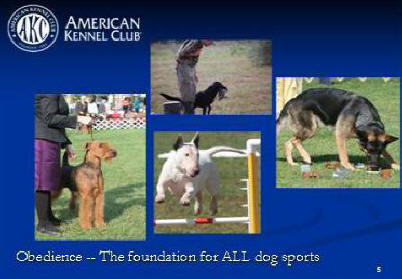 WHY SHOULD I TRAIN MY DOG AT KEYSTONE CANINE TRAINING
CLUB? - Attending classes at our club gives you the benefit of helping and
learning from one another. Our instructing staff has the experience of
working with dogs of all breeds (including mixed breeds), ages and
temperaments (including puppies, adolescents and seniors). Our instructors have earned
various AKC obedience titles, and have competed in many levels of
competition. All of our graduates have benefited from training using our
positive reinforcement method and are more aware of their dog’s needs. The
joy and pride that you get from having a well behaved dog is beyond words!
WHY SHOULD I TRAIN MY DOG AT KEYSTONE CANINE TRAINING
CLUB? - Attending classes at our club gives you the benefit of helping and
learning from one another. Our instructing staff has the experience of
working with dogs of all breeds (including mixed breeds), ages and
temperaments (including puppies, adolescents and seniors). Our instructors have earned
various AKC obedience titles, and have competed in many levels of
competition. All of our graduates have benefited from training using our
positive reinforcement method and are more aware of their dog’s needs. The
joy and pride that you get from having a well behaved dog is beyond words!
AKC OBEDIENCE COMPETITION INFORMATION
Levels of Competition
There are three levels of competition in obedience:
NOVICE - For the dog just getting started in obedience.
OPEN - The second level includes more complicated exercises, which teach the dog to do a variety of tasks and to follow commands either by voice or signal.
UTILITY - The third and highest level of obedience competition.
SEE WWW.AKC.ORG FOR MORE INFORMATION.
 |
 |
|
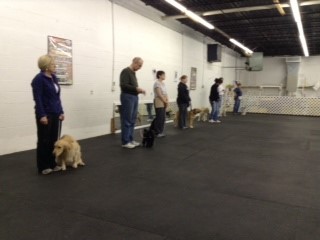
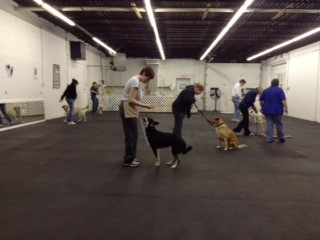
Both Pictures: KCTC Family Manners II Class |
|